For P3 most of the topic ideas that
I brainstormed dealt with factors that take a toll on human’s ability to be
happy and successful. These ideas included, how sleep affects student’s grades,
how bullying affects the victim’s life, how concussions relate to the risk of
depression, and lastly, whether or not flu shots influence good health. These
topics interest me because I have a passion in understanding what it is that
can make or break a person’s dreams. I also love looking at topics through a
psychologist’s eye because the brain fascinates me. Due to the fact that these
topics are not able to be found in the “Ethics in Higher Education” book I will
be looking at scholarly articles to research my topic instead.
Originally I had no idea what it
was that I wanted to research, so I began by thinking about topics that have
come up in my current classes, mainly my CO 150, ANTH 100, and PSY 100 classes.
Trying to stay in the Ethics in Higher Education course topics, my first thoughts
included the factors that affect student’s success. Deriving from that my topic
broadened, and I determined that I wanted to research factors that affect people’s
overall success in life. This realization brought me to becoming more interested
in the psychologist field of the brain. After finalizing my thoughts, I
determined that I am most interested in researching and learning about the
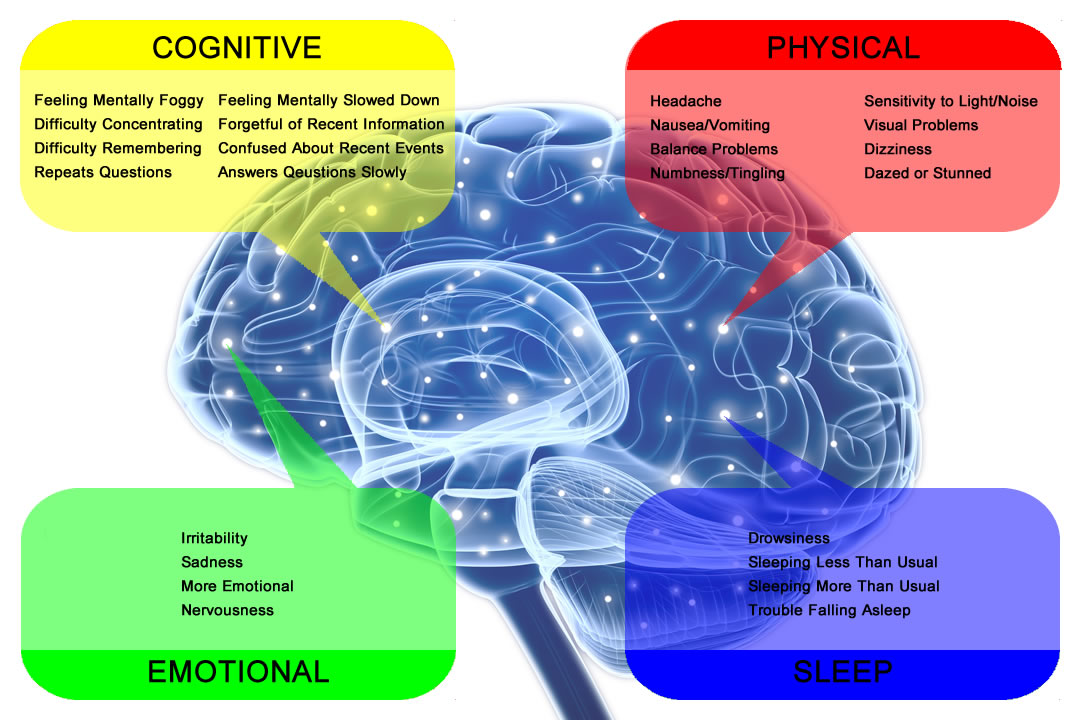
relation between concussions and the impact they have on the emotional stability
of a person. My inquiry question is, “How do concussions affect the amygdala
and how does it cause a greater risk for depression.”
http://www.advancedvisiontherapycenter.com/Documents%20and%20Settings/58/Site%20Documents/Site%20Pictures/Concussion%20Symptoms.jpg
On top of my interest for glitches
in our brain that cause emotional stability, I also wanted to choose this as my
research topic because it was the easiest topic for me to come up with
stakeholders. Some stakeholders that are likely to be concerned with
concussions effect on the amygdala include, cognitive or counseling
psychologists, athletic directors, sports coaches, athletes, and parents of
athletes. An example of a possible cognitive psychologist or counseling
psychologist is Katharyn Rickards, an Associate professor and Director of the
Integrated Health Psychology Clinic at Colorado State University. Along with
that an example of an athletic director that may be interested in this topic
could be Colorado State University’s athletic director, Joe Parker. Mike Bobo,
the head coach of the Colorado State University football team could also be a
potential stakeholder. Along with that since football players are at high risks
for concussions, one of Colorado State University’s own could be interested, such
as senior, Deonte Clyburn or his parents or any parent involved in the well-being
of their athlete. Although most may want to know how concussions truly affect
our brains, some of the stakeholders may be opposed to knowing the full details,
while other will be extremely concerned. Some of the stakeholders mentioned
earlier that may want to hear this research would include, any psychologist
looking at the mental health of their patients, or an athlete, or parent of an
athlete that is more concerned with their health than their ability to continue
playing the sport. On the other hand, some stakeholders that may not want to know
the full effect that concussions have on the brain include, coaches and
athletic directors that are scared of losing their athletes.
All in all, I am excited to
research this topic but I do have concerns that I will not be able to find
enough factual information, or that I am not going to be able to properly write
the bibliography. In order to eliminate the potential of these concerns occurring
I am going to make sure that I start my research early, and that I ask
questions when I am confused about something. It would also be helpful if we
could have class time to peer review the bibliographies.

No comments:
Post a Comment